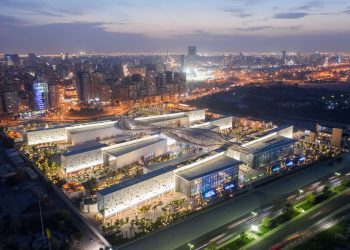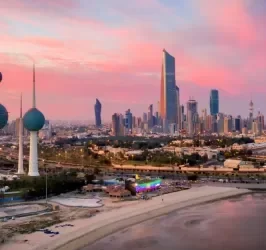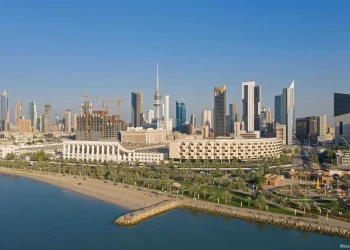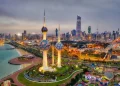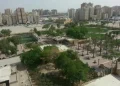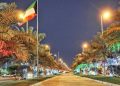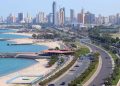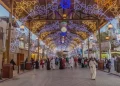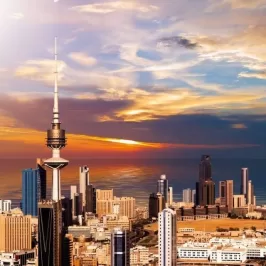
Kuwait City is the capital of the State of Kuwait, housing the headquarters of the country’s government and the ruler’s palace. It is the largest city in terms of land area occupied, and what sets this city apart is that it has towers taller than any other building in any city in Kuwait. Kuwait City overlooks the Arabian Gulf coast. Let’s get to know this city better in more detail, to understand some important facts about it and to take a closer look at the significant areas it contains.
You can choose from a range of luxury residential accommodations in Kuwait through the Sakan platform, where you can select from a variety of units, including apartments and houses for sale in Kuwait‘s most vibrant areas.
What is Kuwait City, and where is it located?
Kuwait City is the official capital of the State of Kuwait and its largest city. It serves as an important economic, political, and cultural center. The city is located in the southern part of Kuwait Bay on the Arabian Gulf at Ras Ajouzah, giving it a strategic position in the center of the country. Kuwait City consists of five main areas: East, Qibla, Salhiya, Mirqab, and Dasman. Additionally, it is close to Failaka Island, which is one of Kuwait’s main tourist destinations, with Greek ruins reflecting the region’s rich history.
What are the most important areas of Kuwait City, the capital?
Kuwait City is a vibrant capital and contains five main districts: East, Qibla, Salhiya, Mirqab, and Dasman. Each of these districts has a rich history and prominent landmarks that contribute to the cultural and civil identity of the city.
-
East Area: East is one of the oldest neighborhoods in Kuwait, dating back to the city’s origins. It was named after its location east of Al-Sief Palace, the former seat of the ruling Al-Sabah family. The area is strategically located overlooking the Arabian Gulf, making it a commercial and vital center for centuries. Prominent landmarks in this area include Souq Sharq, Al-Amiri Hospital, and Beit Dixon. Moreover, it is home to the Al-Babtain Central Library for Arabic Poetry, a significant cultural center. Over time, East has become a preferred area for living and investment due to its cultural diversity and proximity to vital facilities.
-
Qibla Area: Also known as “Jibla,” Qibla is located in the western part of Kuwait City. It is named after its location facing the direction of the Qibla (direction of prayer) from the Al-Sief Palace. Historically, Qibla was an important commercial center, housing the Mubarakiyah Market, one of the oldest traditional markets in Kuwait. The area features narrow streets and heritage buildings reflecting the old Kuwaiti architectural style. It also contains key landmarks like the Banking Complex and the Ice Skating Hall, making it a unique blend of history and modernity.
-
Salhiya Area: Located in the heart of Kuwait City, Salhiya is known for its commercial vitality. It boasts many shopping malls, luxury hotels, and government buildings, making it a key destination for shopping and entertainment. Salhiya is also home to several administrative offices, adding to its importance as a commercial and administrative hub.
-
Mirqab Area: A historic district located south of the Qibla area, Mirqab blends residential and commercial buildings and houses many government institutions and public services. The area has experienced significant urban development while preserving some of its historic landmarks that reflect its heritage and authenticity.
-
Dasman Area: Situated in the eastern part of Kuwait City and directly overlooking the Arabian Gulf, Dasman is one of the city’s upscale districts. It is famous for housing Dasman Palace, the former official residence of the Emir of Kuwait, which holds significant historical value. Dasman is known for its tranquility and sophistication, featuring many luxury villas and recreational facilities, making it a prime area for residents seeking comfort and peace.
These five areas together create a cohesive fabric reflecting the history and present of Kuwait City, balancing ancient heritage with continuous urban development.
What are the key facts about Kuwait City?
-
Kuwait City is the largest port in the State of Kuwait.
-
The city was founded in the early 18th century when it was inhabited by a group of settlers from the Arabian Peninsula.
-
The economic life of the region at the time of its founding was based on pearl diving and trade with India and the Arabian Peninsula.
-
The name “Kuwait” is derived from the Arabic word “Kout,” meaning a fort overlooking the sea.
-
The city and its fields suffered some damage during the Gulf Wars.
-
The discovery of oil fields in Kuwait City led to a notable economic boom.
-
Oil fields were discovered in the capital in 1938.
-
The city began to grow commercially after 1991, with its economy booming after oil exports began.
How did Kuwait develop economically and architecturally?
Since the discovery of oil in 1934, Kuwait City has seen significant developmental growth in its infrastructure and economy. The city has rapidly expanded to include wide parks and gardens, such as the Martyr’s Park, and many financial institutions like the Kuwait Finance House and banks. It has also become an important educational center, home to Kuwait University, which offers a wide range of disciplines, as well as the Public Authority for Applied Education and Training.
Kuwait is also a leading country in the petrochemical industries, with industries including oil refining, diesel, gasoline, kerosene, and gas oil. Other industrial sectors include plastics, detergents, food processing, and metal industries, in addition to the production of various construction materials.
What is the history of Kuwait City, and how has it developed over time?
Kuwait is often referred to as a “city-state,” as its history is closely linked to the history of the emirate itself. The city evolved as an urban settlement in the 18th century through migrations from the Arabian Peninsula, along with some communities settled along the Gulf coast.
Historically, the sea was a central part of Kuwait’s economy, with the city depending heavily on fishing, pearl diving, and maritime trade. Kuwait was a crucial stop on the caravan trade route between India and the West.
Traditional Kuwaiti architecture is characterized by closely built homes and narrow winding streets designed to protect inhabitants from the sun’s heat, with defensive walls constructed to protect the city from external invasions. Kuwait built three main walls, the last of which was the Kuwait Wall in 1919, containing five main gates.
With the discovery of oil in 1946, Kuwait experienced major economic transformations. It became a center for oil exports, leading to the development of infrastructure, increased urbanization, and the transformation of the city into a modern metropolis with skyscrapers and massive economic projects.
How has oil influenced the development of Kuwait City?
Oil has played a pivotal role in shaping Kuwait City’s modern economy. Since the first oil shipment in 1946, rapid growth has occurred across various sectors, supported by oil revenues. These revenues funded infrastructure projects, schools, hospitals, and improvements in living standards.
This oil boom led to the expansion of the city beyond its old walls, with the creation of modern residential areas, commercial centers, and industrial zones. The oil revenues also helped develop the road network, bridges, and the establishment of Shuwaikh Port and Ahmadi Port, solidifying Kuwait’s position as an important economic hub in the Arabian Gulf.
Why is Kuwait City named as such?
The name “Kuwait” dates back to the 18th century. It was originally known as “Al-Qurain,” which is a diminutive form of the word “Qurn,” meaning a hill or raised land. “Kout” is an Arabic term used for fortresses and castles, and this name was common in many Arab cities.
It is said that Barak bin Ghrair Al-Humayid, the Sheikh of the Banu Khalid tribe, founded the town near the area known as Al-Qurain. Over time, the name “Kuwait” became the official name used instead of “Al-Qurain.” Today, the locals refer to Kuwait City as “Al-Daira,” a colloquial term for their capital.
What is the population of Kuwait City?
The population of Kuwait City is about 412,000 people, according to census statistics. The city houses most of Kuwait’s governmental institutions and a large number of key businesses.
What are the tourist landmarks of Kuwait City?
-
The Grand Mosque in the Capital
This famous and important landmark is located near the Arabian Gulf coast. The construction of the mosque began in 1979 and was designed by Mohammed Makiya in the Andalusian architectural style. The total area of the mosque is around 45,000 square meters. -
Kuwait Towers
The Kuwait Towers consist of three massive towers located in the capital, specifically in front of the “Dasman” palace in the eastern part of the city, overlooking the Arabian Gulf coast. The idea of building the towers was proposed in 1963. They are made up of 55,000 pieces of Chinese porcelain, coated with eight different types of paint. The towers are divided into three sections based on size, with a main tower, a middle tower, and a smaller tower. -
Liberation Tower
This is a communications tower in Kuwait, ranked as the second tallest tower in the country, after the Al-Hamra Tower. It stands at 372 meters tall. The tower was completed in 1993 and officially opened in 1996. It consists of 11 floors and provides international and local communication services. -
Al-Shaheed Park
This is a famous park that opened in 2015 and is one of the well-known public parks in the area. The total area of the park is around 220,000 square meters, and it is located on the oldest circular road in Kuwait City. A key historical feature of the park is the popular gate, one of the five remaining old gates in Kuwait.
If you’re looking for the best apartments for rent in Kuwait at reasonable prices in vibrant locations, here are some great options: apartments for rent in Hawalli and apartments for rent in Jabriya.
-
Al-Raya Tower
One of the famous towers in Kuwait City, located in the eastern part of the capital, overlooking the Arabian Gulf coast. This tower is one of the largest and tallest in Kuwait, ranking 43rd globally in height. It consists of about 60 floors, with a mix of quiet apartments and studios. The tower is 300 meters tall and opened in 2008. It also includes a prominent hotel and designated parking areas. The tower is owned by Al-Saleh Company, and its construction took approximately 16 million hours. -
The Sea Day Village
The Sea Day Village is a famous heritage village located in the capital and is one of the country’s major landmarks, attracting many visitors. This village was historically known for its pearl trade. It features restaurants and cafés, where you can enjoy a drink in the open air. The village also showcases beautiful old heritage items and contains areas for handicrafts and handmade items. Additionally, there are areas suitable for children with entertainment games, making it an ideal place to experience Kuwait’s ancient era.
What activities can you do in Kuwait City?
When you visit Kuwait and find yourself in the heart of the capital, don’t forget to stop by the Grand Mosque to pray inside. After finishing your prayers and resting in the mosque, you can take a break before starting a long tour of the city. You can enjoy a stroll in the park surrounding the mosque and relax in the beautiful green nature.
You can take your kids and visit one of the many public parks and playgrounds in the heart of the capital. Additionally, you can visit the famous three Kuwait Towers and take in their grandeur. Don’t miss the chance to see Al-Raya Tower from the outside and admire its towering height and impressive structure.
You can also explore the old areas of the capital to learn more about Kuwait’s ancient history. While on this journey, enjoy a meal at one of the famous restaurants or traditional eateries in the historical neighborhoods. Also, take your children to one of the amusement parks designed for them, allowing them to have fun and enjoy some quality time.
This concludes the overview of the key features of Kuwait City, its location, and important landmarks, along with a detailed guide of popular tourist spots. Through the Sakn blog, you can also learn more about key areas in Kuwait, such as the Granada area, the Rabiya area, and the Khiran area. If you’re looking for the best houses and shops in Kuwait for a peaceful stay or want to own a place for added security, here are some great options: shops for rent in Ahmadi, houses for sale in Abu Fatira, and shops for rent in Mahboula.
[sc_fs_faq html=”true” headline=”h3″ img=”” question=”What is the capital of Kuwait?” img_alt=”” css_class=””] The capital of Kuwait is Kuwait City. [/sc_fs_faq]
[sc_fs_faq html=”true” headline=”h3″ img=”” question=”What is the area of Kuwait City?” img_alt=”” css_class=””] The area of Kuwait City is approximately 200 square kilometers. [/sc_fs_faq]
[sc_fs_faq html=”true” headline=”h3″ img=”” question=”What is the smallest governorate in Kuwait?” img_alt=”” css_class=””] The smallest governorate in Kuwait by area is Hawalli Governorate, which has an area of approximately 85 square kilometers. Despite its small size, it is the most densely populated of Kuwait’s six governorates. Hawalli was established in 1962 and is known for having many commercial centers, markets, and residential areas, making it one of the most active and vibrant regions in the country. [/sc_fs_faq]
[sc_fs_faq html=”true” headline=”h3″ img=”” question=”What is the best governorate in Kuwait?” img_alt=”” css_class=””] The Capital Governorate (Kuwait City) is considered one of the best and most important governorates in Kuwait. It is centrally located and is home to many commercial and cultural landmarks, in addition to being a hub for business and government services. The governorate also has a large population density compared to other regions, making it a primary destination for living and working.[/sc_fs_faq]
[sc_fs_faq html=”true” headline=”h3″ img=”” question=”What is the wealthiest area in Kuwait?” img_alt=”” css_class=””] The Fahaheel area is considered one of the wealthiest areas in Kuwait. This area is known for its high standard of living and luxurious residential and commercial facilities. Fahaheel also hosts many major commercial projects and financial centers, making it one of the most attractive places for the wealthy and investors.[/sc_fs_faq]
[sc_fs_faq html=”true” headline=”h3″ img=”” question=”Is Doha the capital of Kuwait?” img_alt=”” css_class=””]
No, Doha is the capital of Qatar, not the capital of Kuwait. The capital of Kuwait is Kuwait City.
[/sc_fs_faq]
[sc_fs_faq html=”true” headline=”h3″ img=”” question=”Is Kuwait a kingdom or a republic?” img_alt=”” css_class=””]
Kuwait is an emirate, not a kingdom or a republic. The Emir of Kuwait serves as the head of state.
[/sc_fs_faq]
[sc_fs_faq html=”true” headline=”h3″ img=”” question=”Is Kuwait part of Iraq?” img_alt=”” css_class=””]
No, Kuwait is not part of Iraq. It is an independent sovereign state, established in 1961 after gaining independence from the United Kingdom. Kuwait was invaded by Iraq in 1990 but was liberated in 1991.
[/sc_fs_faq]